I took my first camper van trip solo in Tasmania, about a decade ago. It was the first dream I checked off my list, and if you haven’t read it yet, that’s where it all started: the page with four dreams, the cold feet on the plane and that night in the empty town.
So let’s be honest. Ten years is a long time. Apps have changed, campgrounds have closed, prices have gone up and ferries have been replaced. So I didn’t sit down to write this from memory. I sat down and researched: Tasmania’s official websites, the rental companies’ sites, and mostly what travelers from Australia and all over the world who did it recently are writing today. I pulled it all together around one question: how would I do this trip if I set out today?
The info here is accurate as of October 2026. Prices and rules change, so before you go, double-check the sources listed at the end.
Why a camper van in Tasmania
Tasmania is an island you can loop around in a few days of driving, and the nature there is wild and changes almost every hour: beaches, lakes, forests and mountains. A camper van gives you a freedom hotels don’t. You stop wherever it’s beautiful, sleep wherever it’s allowed and move on whenever you feel like it. Me, anyway, I went to see Taz (anyone who grew up on “Taz the Tasmanian Devil” will get it).
How to get to Tasmania
By plane. I flew from Melbourne. The direct flight to Hobart takes about an hour and fifteen minutes, and Jetstar, Qantas and Virgin Australia all fly the route. Most camper van companies are based in Hobart, so the easiest thing is to land there and pick up your van.
By ferry. The Spirit of Tasmania ferry leaves from Geelong, near Melbourne, and arrives in Devonport in the north of the island. The crossing takes about nine to eleven hours, and it’s usually overnight. At the end of October 2026, two new, bigger ships are supposed to enter service. According to reports from September 2026, spots for large vehicles are still limited at first, and in summer they sell out fast. If you want to bring a camper van you rented on the mainland, check your contract first to see if the rental company allows it. Some companies are fine with it, and some aren’t.
And one thing worth knowing in advance: you’re not allowed to bring fresh fruit and vegetables into Tasmania, including potatoes, garlic and herbs. That goes for both flights and the ferry. So don’t do a big grocery run before you arrive, do it there.
How to rent a camper van in Tasmania
Where. Hobart has the biggest selection. Companies operating there include Apollo, Britz, Maui, Mighty, Cheapa Campa, Spaceships, Indie and also Tasmania Campers. You can also pick up in Launceston. At Britz, for example, there’s a surcharge of AUD 125 for a Hobart pickup, and with the big companies a one-way drop-off in another city usually costs around AUD 200. The best deal is returning to the same branch.
How much it costs. According to a big comparison site, the range is roughly AUD 40 to 410 a day, depending on size and season. It’s cheapest between April and September, and most expensive in summer, from December to February. A decade ago, I searched and found a reasonably priced camper van for ten days. The principle hasn’t changed: compare a few companies, and book early.
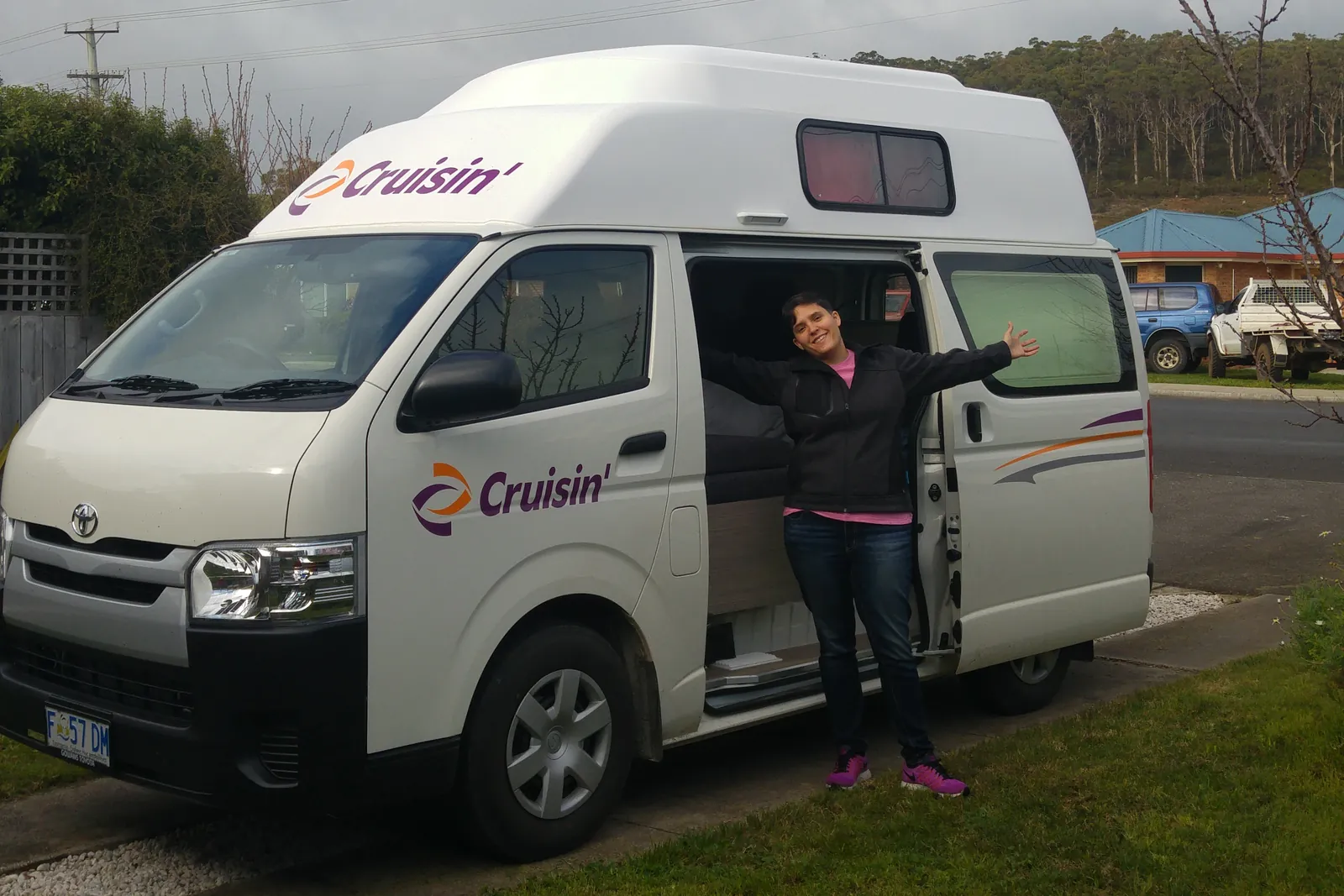
What you need. You usually have to be at least 21, and some companies accept younger drivers for an extra fee. You usually also need one or two years with a full license. And an International Driving Permit: just get one and don’t overthink it. According to Tasmania’s transport department, anyone whose license isn’t in English must carry an International Driving Permit or a certified translation, and rental companies require the same thing. And without the right documents, if something happens on the road, you could get into trouble with your insurance too. In the US you can get one from AAA, and in most other countries from your national automobile club. Don’t forget to bring your original license too, because the international permit doesn’t replace it.
Insurance. This is where it pays to read the fine print. Find out what the deductible is, how much the deposit is, and whether your credit card or travel insurance even covers a camper van rental. Many contracts also restrict driving on dirt roads.
Which camper van. This is the most important decision, and it affects the whole trip:
- A small camper van with a bed and a kitchenette: cheaper and easier to drive, but it has no toilet or shower.
- A self-contained camper van with a toilet and a gray-water tank: more expensive, but it opens up a lot more free places to sleep. At many local council campgrounds, you’re only allowed to stay overnight in a self-contained vehicle, and there are rangers who check.
Where you’re allowed to sleep with a camper van in Tasmania
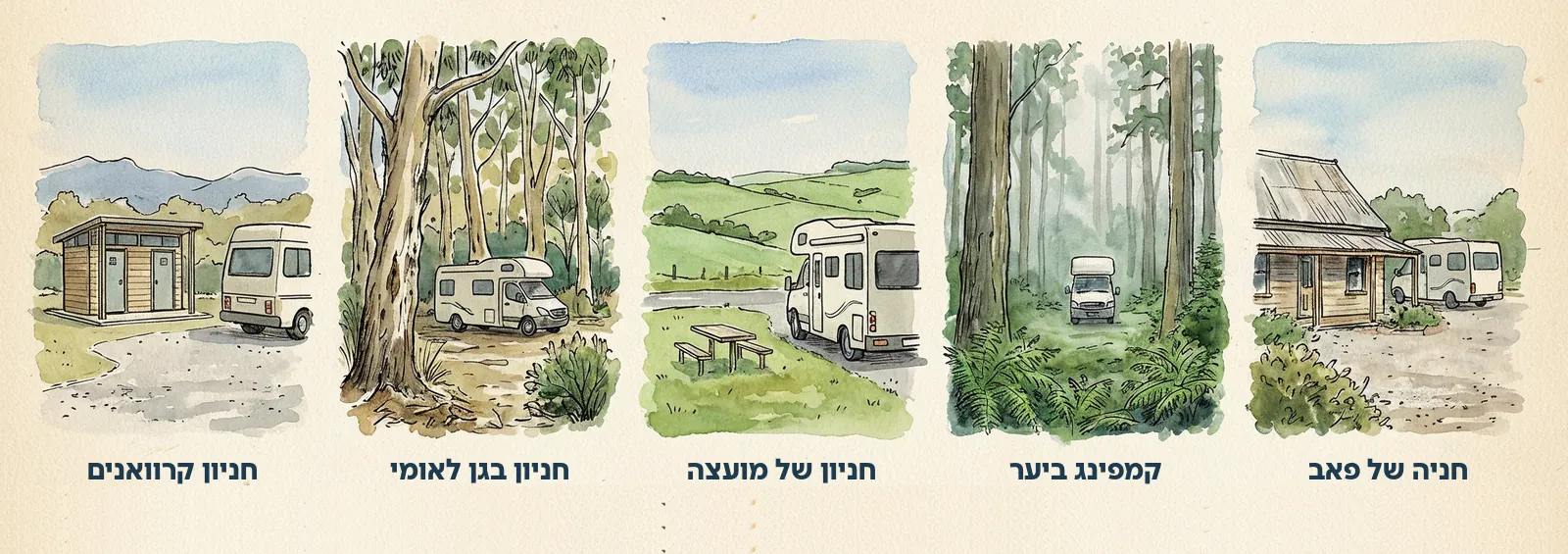
This is the part I most wish I’d known back then. Tasmania doesn’t have one rule for the whole island. Every body that manages the land sets its own rules, so the most important thing is to understand who manages the place where you’re stopping.
Paid campgrounds (holiday parks / caravan parks). These have showers, toilets, power and washing machines. They’re ideal for a night when you need a hot shower, and also the safest bet when you’re not sure where you’re allowed to stay.
National park campgrounds. There are paid campgrounds and free ones too, but to enter any national park in Tasmania you need a park pass. For a one- or two-week trip, the Holiday Pass is the best deal: AUD 98.35 per vehicle, for up to two months. A daily pass costs AUD 49.15. At Cradle Mountain, the shuttle to Dove Lake costs extra. Some examples of free campgrounds: around the Bay of Fires the campgrounds are free, no booking needed, and you can stay up to four weeks. At Friendly Beaches in Freycinet National Park camping is free, but you need a park pass, there’s no water, and you can stay up to fourteen nights. At campgrounds like these, spots are first come, first served, so in summer it’s worth arriving early.
Free council campgrounds. This is where things change the most, and it’s exactly what’s changed since I was there. A fresh example: the Central Coast Council in the island’s northwest decided that from the start of 2026 its campgrounds are no longer free. Today you pay AUD 15 a night, self-contained vehicles only, no tents and three nights max. Another campground in the area, which still shows up on old free-camping lists, has closed completely. Bottom line: anything you read about a campground in a post from a few years ago, double-check in the app and on the sign when you get there.
State forests. On land managed by Tasmania’s forestry company (Sustainable Timber Tasmania), free camping is allowed, except in areas signposted as off-limits. There’s no infrastructure at all, so bring water and take your trash with you. Roads can close because of forestry work, and on total fire ban days you can’t light a fire.
Pubs and wineries. Some pubs, clubs and wineries let you stay overnight in their parking lot, sometimes for free and sometimes in exchange for a meal or a small fee.
Where you can’t. In towns and residential areas, councils have bylaws against sleeping in your vehicle, and rangers can give you a fine. In national parks, you can only sleep at designated campgrounds. And a “No camping” or “No overnight parking” sign beats anything the app says.
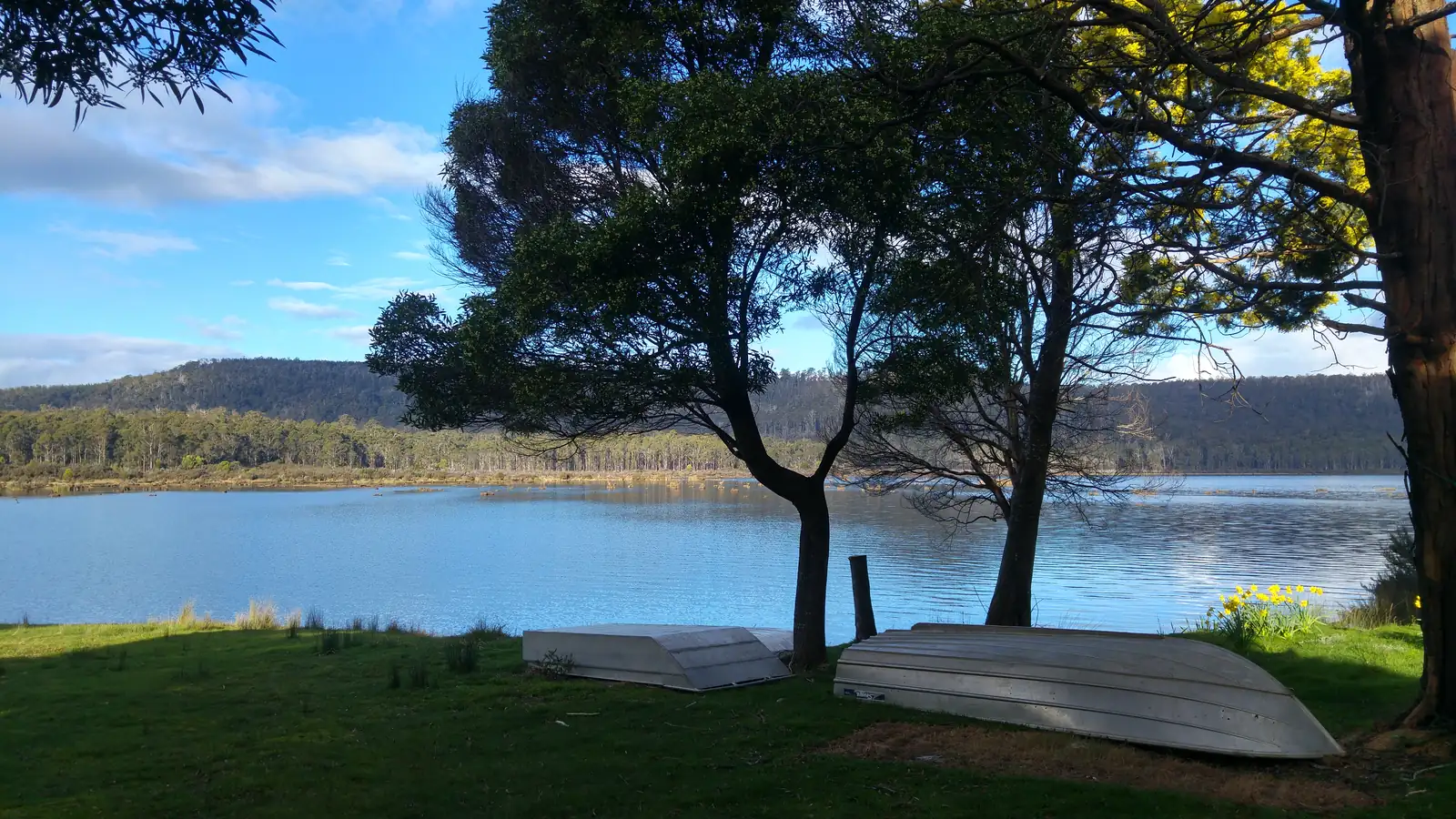
And now, with all this info, I’m going back to that night. I drove into a small town in the dark, with no signal and no idea where the nearest campground was, and parked the camper van in the middle of some parking lot. To this day I don’t know if I was allowed to sleep there. What I do know today: the decision not to drive another hour and a half in the dark was the right one, and I’ll explain why below.
The apps I’d download today
A decade ago, cell coverage in Tasmania was terrible, and GPS apps weren’t what they are today. Today I’d download these while still at home, and save maps for offline use:
- WikiCamps: the app most travelers in Australia use. It has free and paid campgrounds, up-to-date reviews and dump points, and it works offline too. It’s a paid app.
- CamperMate: campgrounds, public toilets and service points, with maps that work offline.
- Camps Australia Wide: a big database of campgrounds, including free ones.
- Discover Tasmania: Tasmania Tourism’s official app. It builds an itinerary and works as an offline guide.
- Fuel Map Australia: fuel prices and nearby stations.
- Emergency AUS: alerts for fires, floods and storms.
- Google Maps: download the island map in advance.
And about coverage: back then I had almost no signal at all. Today, if you buy a local SIM, Telstra is considered the network with the best coverage in rural areas. But even with it, in wild places the signal disappears fast. So pick where you’ll sleep before it gets dark, not after.
Driving in Tasmania: what you need to know
You drive on the left. Yep, it’s confusing at first. Even I, on the plane, was wondering how I was going to drive on the other side of the road.
Speed. If there’s no sign, the speed limit is 50 km/h (31 mph) in town, 100 km/h (62 mph) on highways between towns, and 80 km/h (50 mph) on dirt roads. The roads are narrow and winding, and according to Tasmania’s road safety council, 93 miles (150 km) can take two hours. The official recommendation: no more than 186 miles (300 km) a day.
Animals on the road. This is the most important thing to understand, and for me also the hardest part of the whole trip. Every ten, fifteen minutes, I saw another dead animal on the road. At dusk and at night, animals come out onto the roads: wallabies, pademelons, possums, wombats and Tasmanian devils too, and on just one roadkill-reporting app, almost 2,000 animals were reported in the past year. So you have to be careful. The official recommendation is to slow way down between dusk and dawn, or just not drive at those hours. And that’s the explanation I promised: when I decided that night not to drive another hour and a half in the dark, without knowing it, I did exactly what’s recommended today.
Sample route: a ten-day loop
My route was roughly a loop, but not exactly, because I strayed from the road I’d planned. So don’t treat the route here as a rule. It’s a skeleton.
Here’s a popular ten-day loop from Hobart, based on the route published by one of the big rental companies. All in all, it comes to about 870 miles (1,400 km):
- Hobart to Freycinet: about three hours of driving. Wineglass Bay and the beaches of the east coast.
- Freycinet to the Bay of Fires: about two hours. The orange rocks and white sand, and free campgrounds on the beach.
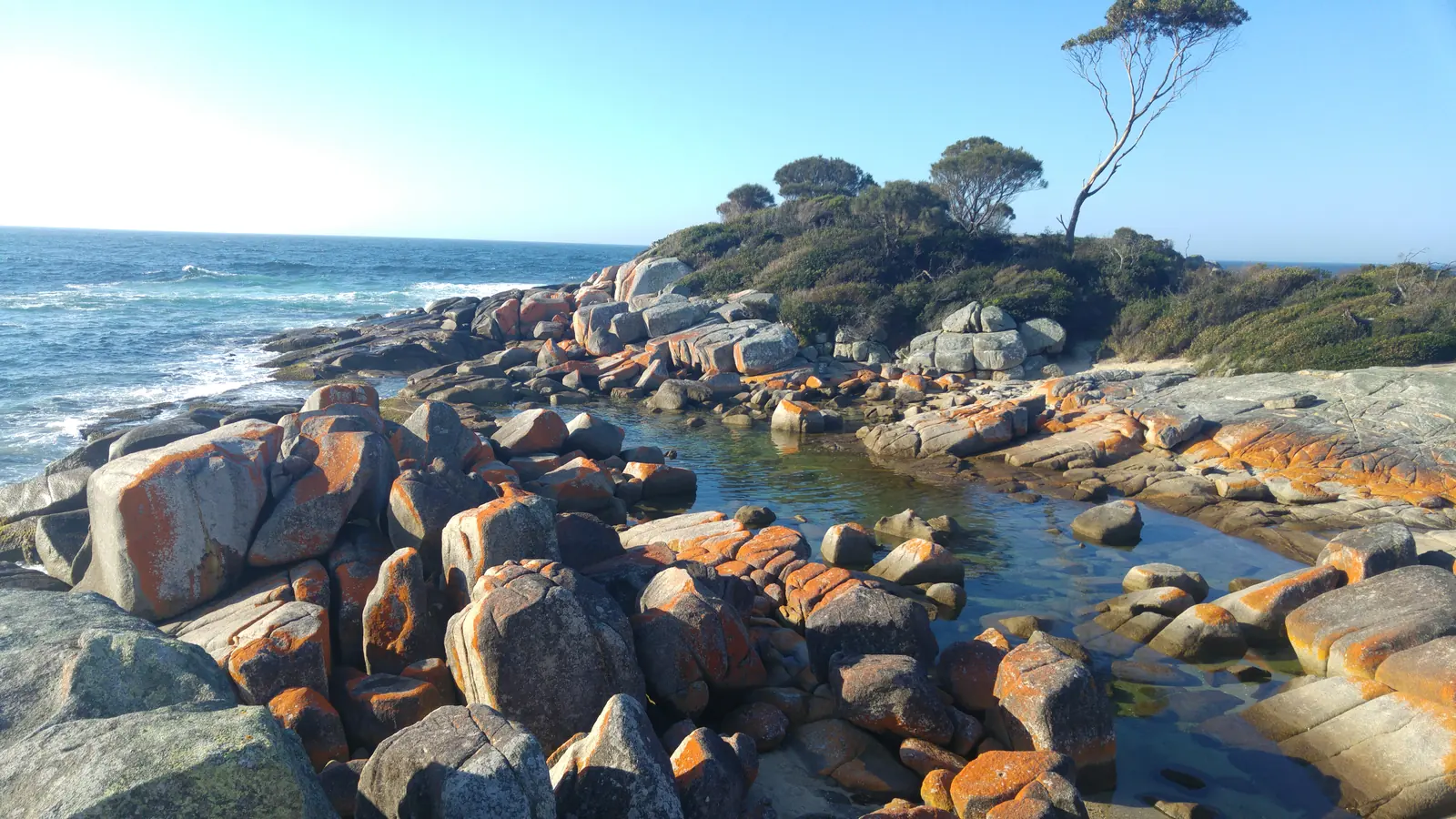
- Bay of Fires to Launceston: about two and a half hours.
- Launceston to Burnie, and on to Stanley: the north coast.
- Stanley to Cradle Mountain: about three hours. One of the most famous national parks on the island.
- Cradle Mountain to Strahan: about two and a half hours. The wild west coast.
- Strahan to Lake St Clair: about two hours.
- Lake St Clair back to Hobart: about two and a half hours.
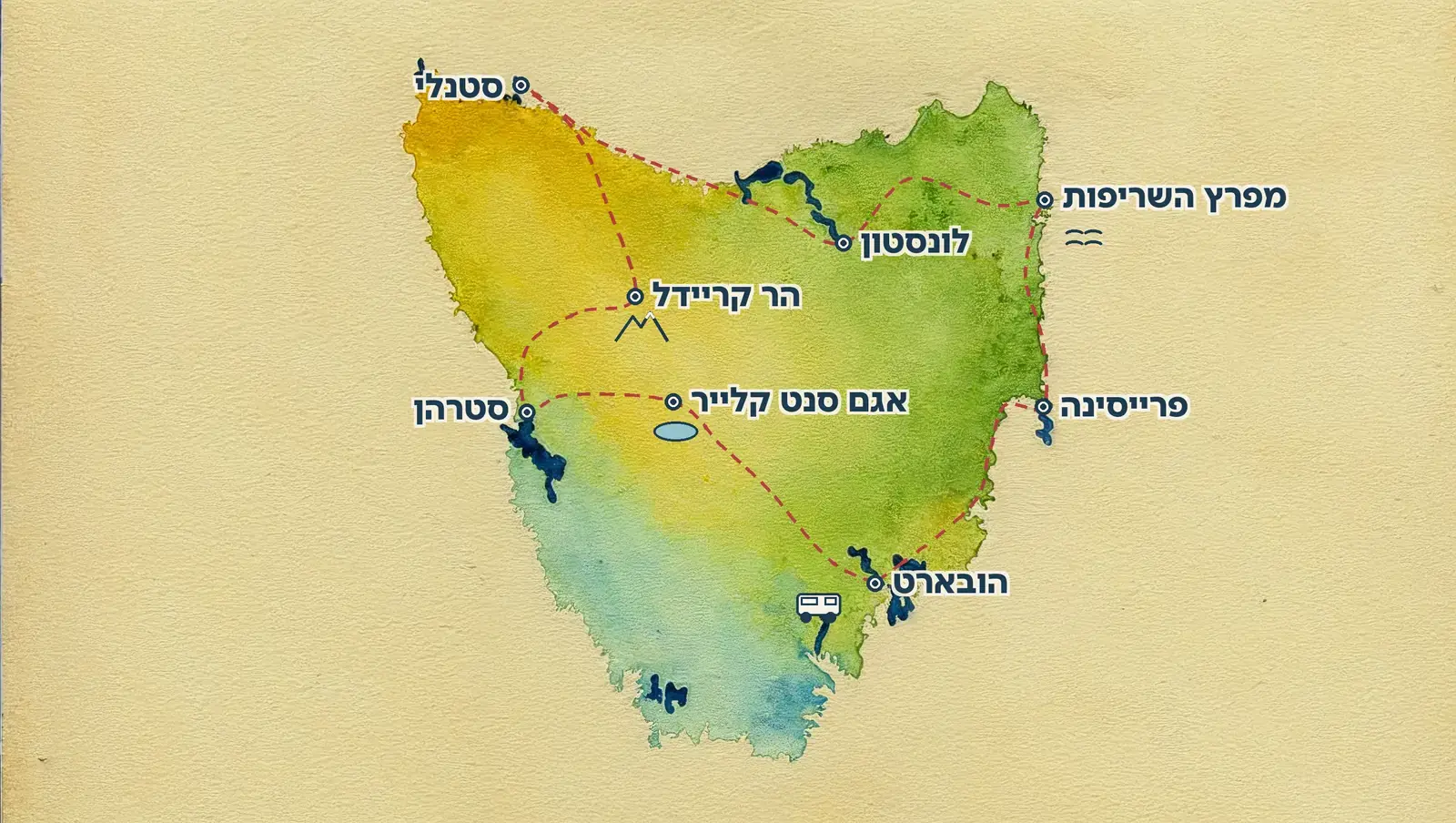
A route like this passes through several national parks, so the Holiday Pass pays off from day two. And in winter, before driving the mountain roads and the west coast, it’s worth checking road conditions.
When to go
- Summer (December to February): warm, dry, and it doesn’t get dark until after 9 p.m. It’s also the busiest and most expensive season, so book everything early.
- Fall (March to May): according to Tasmania Tourism, the best season for a road trip. Calm, sunny and less crowded.
- Winter (June to August): cold, with snow in the mountains. Doable, but you need to be ready for the cold and the mountain roads.
- Spring (September to November): blooms, full waterfalls and sometimes whales too.
Fire, cooking and nature
You’re not allowed to collect firewood in national parks, so if you want a campfire, bring your own wood. In some areas only stoves are allowed, no campfires, all year round. On total fire ban days, all open fires are banned, including liquid-fuel stoves. A regular gas stove is still allowed. Dogs aren’t allowed in national parks, even if they stay in the vehicle.
And where to see Taz
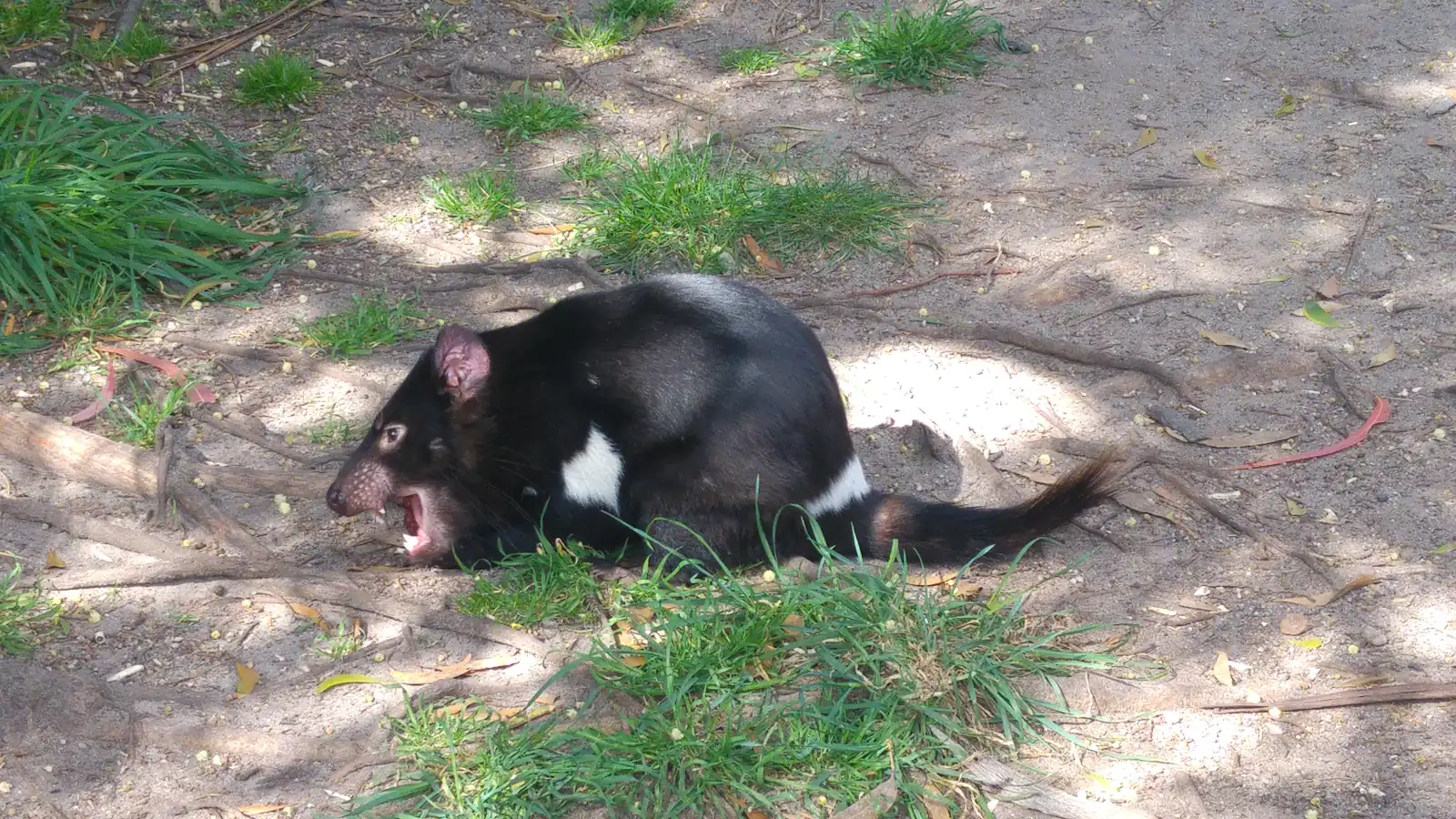
Tasmanian devils are nocturnal, and the chance of meeting one in the wild is small. But you can see them at places working on conserving the species, for example: Bonorong, about half an hour from Hobart. Tasmanian Devil Unzoo, on the Tasman Peninsula. Devils@Cradle, near Cradle Mountain. And Trowunna, in the Mole Creek area. Some of them offer night tours and feeding times.
Questions you might have
No. You can sleep at paid campgrounds, at designated campgrounds in national parks, at council campgrounds according to their rules, and on state forest land, except where there’s a sign that prohibits it. In towns and residential areas it’s usually not allowed.
Yes, get one. It’s required by law when your license isn’t in English, rental companies require it, and without it you could get into trouble with your insurance. And always together with your original license.
I was there ten days, and the popular loops around the island are also about ten days. But at that pace you’re driving almost every day. If you want to slow down, do some hikes and not sit behind the wheel every day, two weeks will be more comfortable.
Paid campgrounds in summer and on holidays, yes. A lot of the free campgrounds are first come, first served, so get there early.
And what doesn’t change
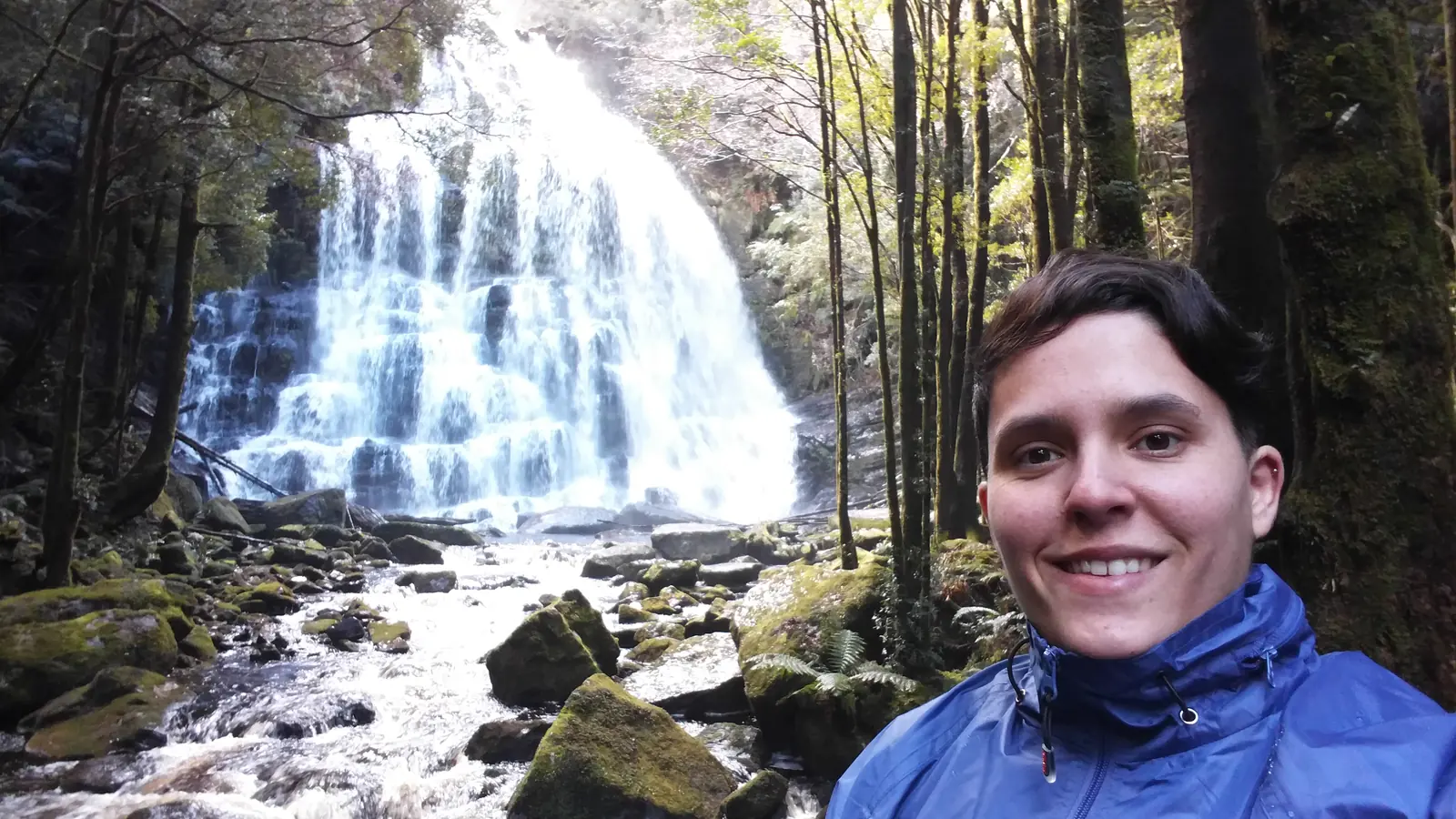
Apps come and go, campgrounds close and prices will definitely keep going up. But what I felt there a decade ago, alone in the face of the unknown, with insane views on every side and me singing to myself in the car because there was no signal, you won’t find that in any app. So plan what you can, and leave room for what you can’t.
And if this trip is already on your list, start with the smallest step: check how much a camper van costs in a month you can actually go. That’s how every flight plan starts.
Sources I checked (October 2026)
- Parks and Wildlife Service Tasmania: park passes and prices
- Parks and Wildlife Service Tasmania: campfires and fire bans
- Tasmania Department of State Growth: driving with an overseas license
- Road Safety Advisory Council: info for visiting drivers
- Biosecurity Tasmania: food you can’t bring in
- Sustainable Timber Tasmania: visiting forest land
- Discover Tasmania: seasons
- Spirit of Tasmania: tips for camper vans